Lara Ferrario
Sowing words. Cultivating thoughts.
Books for those who are growing and those who accompany them, through questions, discoveries and possibilities.
Before the words
I have always been intrigued by things that seem small yet often say far more than we realise. A gesture, a reaction, the way someone looks, responds, closes themselves off or opens up. I have always felt the need to go a little further, to pause at an emotion or behaviour and understand where it comes from, what it holds, what it tells us. For me, writing has become this too: an attempt to put words to what we so often feel but cannot fully explain.
That is how I began observing childhood. A phrase spoken without thinking, help offered too soon, a mistake we allow or prevent, the way we respond to fear, a tantrum or a difficulty. These things happen every day, often while we are doing something else, yet I came to realise that so much of a child’s upbringing takes place precisely there. Not in grand speeches or in the moments when we consciously decide to teach something, but in the ordinariness of our days and in the way we walk alongside children as they grow.
My books grew out of those observations.
I have tried to write about the words that can take root within a child, and about all that we adults leave behind, often without realising it. I have written about parents, their fears, their contradictions and their constant effort to understand when to step in and when to make space.
I have also written about the humour we need to get through certain days, especially when you are a mother and sometimes feel terribly alone in the midst of a struggle that, from the outside, may even seem trivial.
I have tried to create tools for parents who love one another, love their children, yet can no longer find common ground when it comes to bringing them up. Because disagreement does not necessarily mean that a family is not working, and because sometimes it is not about deciding who is right, but finding a way to keep talking to each other.
And then I wrote for children. Books that offer nourishment, curiosity and discovery. Books where it is not simply a matter of sitting down to read: you also make things, colour, search, discover a world different from your own and, if possible, return home with a few more questions.
I have written books that are very different from one another, but to me they all come from the same place: curiosity about what happens as a child grows and about the often invisible mark we adults leave along the way.
I am not interested in teaching anyone how to raise a child. I believe that those who love their child do the best they can with what they have, what they know and their own history.
What interests me far more is observing together what happens.
Understanding why we do certain things, what effect they have and what we might see from another perspective. Sometimes a different word is enough. At other times we need to take something away, do less, wait a little longer. And sometimes there is nothing to put right: we simply have to move through a moment together.
Perhaps that is what I am looking for when I write.
Not a definitive answer to how to raise a child, but a more attentive way of looking at what happens while we do.
To accompany:
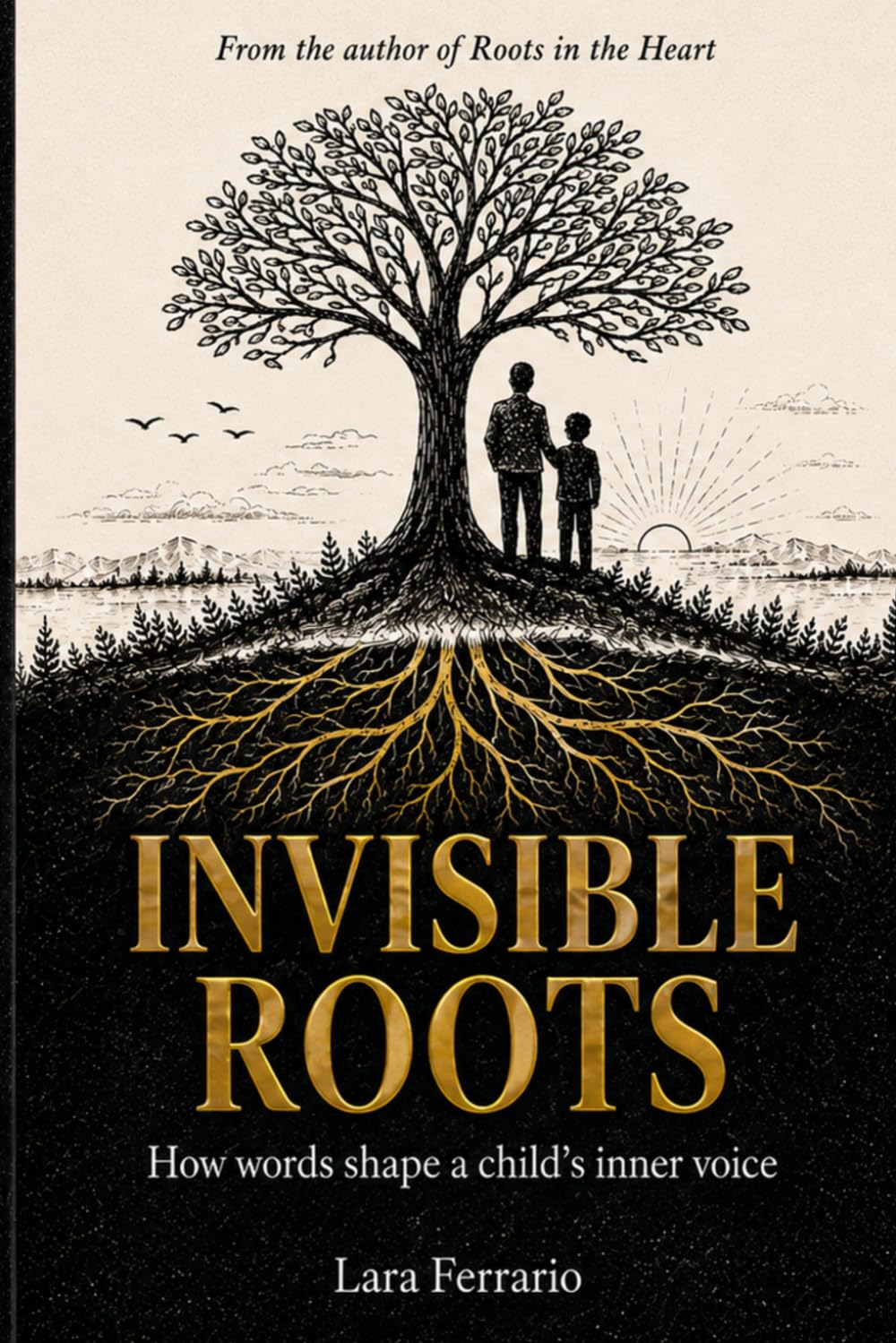
Invisible Roots
There are things we do every day without knowing how long they will remain.
A distracted reply. A mistake we allow. A fear we welcome instead of erasing it. A sentence uttered while we make dinner that lasts three seconds for us, yet may remain within our child for years.
Invisible Roots grew out of that.
Out of an attempt to look beneath the surface of the relationship between an adult and a child, and understand what we are building precisely when we think we are simply living.
It is not a handbook for becoming perfect parents.
It is a compass.
It does not say: ‘Always take this path.’
Rather, it tries to help adults understand where they are, what is happening in the relationship and the direction in which they would like to move.
It is about presence, trust, independence, mistakes, listening, boundaries and all those roots we cannot see growing as we plant them.
Then time passes.
And one day we realise they were there.
Buy
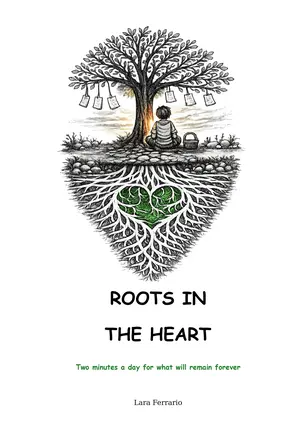
Roots in the Heart
If Invisible Roots explores the why, Roots in the Heart steps into everyday life.
It comes from a very simple conviction: the words a child hears over and over eventually become, at least in part, the words they will learn to use when speaking to themselves.
That is why I brought together 365 phrases, one for every day of the year.
They are not motivational quotes to repeat in front of the mirror, nor magic formulae that guarantee self-confident, happy children immune to life.
They are words to leave behind.
‘I believe in you.’
‘You can change your mind.’
‘You do not have to be good at everything.’
‘You can ask for help.’
‘Your worth does not change when you make a mistake.’
Small messages which, repeated over time, can become the language of a family.
If Invisible Roots is the compass, this is the practical tool.
Because sometimes we know perfectly well what we would like to pass on to our children.
Finding the words, in the midst of real life, is the difficult part.
365 days. 365 opportunities to leave something that we may not see straight away, but which could remain.
The Art of Less
I began thinking about this book after noticing a contradiction.
The more we love a child, the more inclined we are to help them.
And that is entirely understandable.
We tie their shoelaces because it is quicker. We answer before they find the word. We suggest how to solve a problem. We entertain them while they wait because they are bored. We rush to spare them a small frustration because seeing them struggle makes us struggle too.
We do it out of love.
Yet growing up also requires all the things that, with the best of intentions, we sometimes take away: time to try, the chance to make mistakes, waiting, boredom, a responsibility small enough to manage, and even a reasonable dose of frustration.
That is when I began asking not what we should add to our children’s upbringing, but what we could take away.
Not love.
Not presence.
Not protection.
Interference.
That part of help which, without meaning to, ends up occupying exactly the space in which a child might have discovered what they could do.
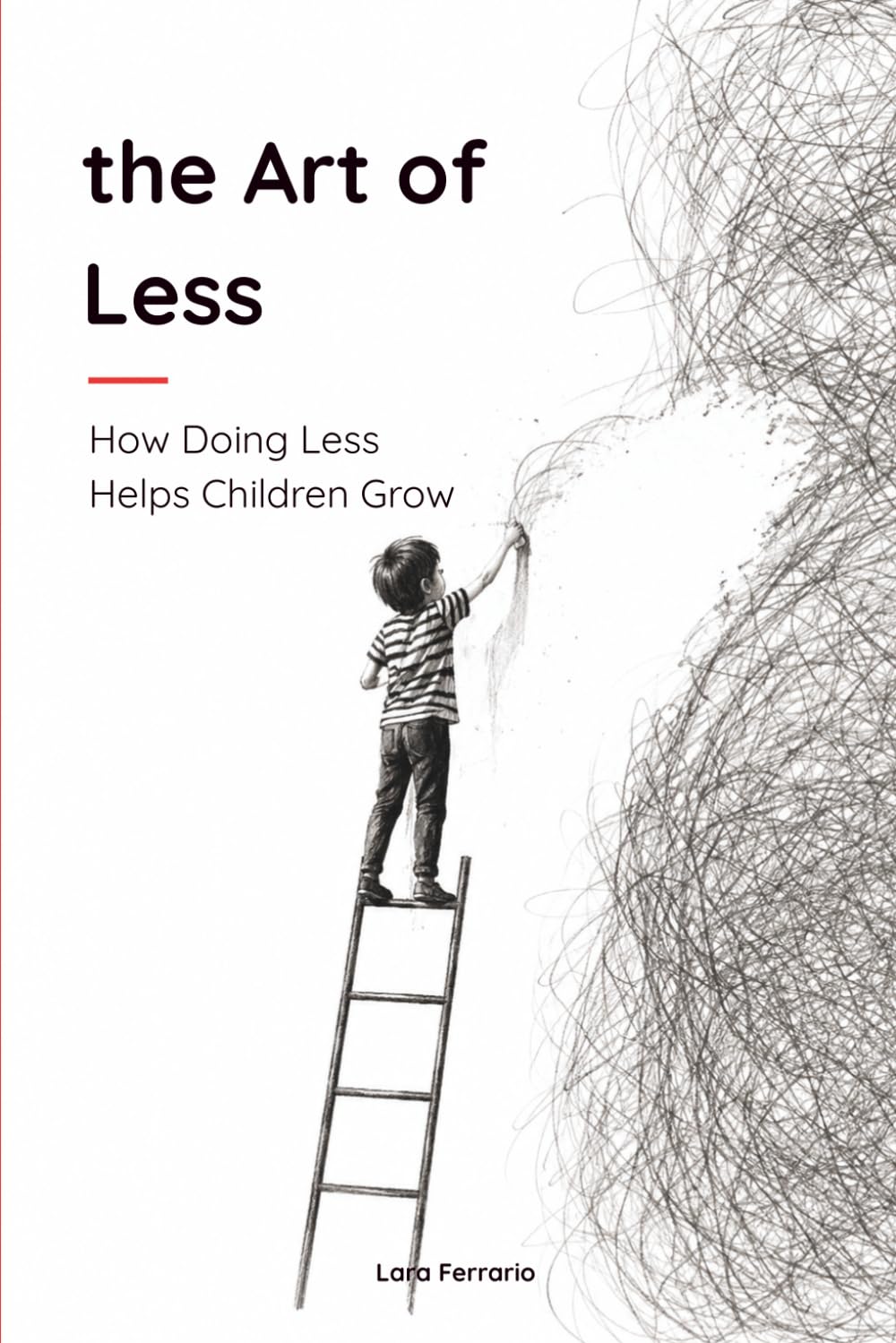
The Art of Less is about this.
The difficult art of staying beside them without taking their place.
Of supporting without dragging.
Of protecting without preventing every fall.
And, above all, of accepting that sometimes our task is not to do something.
But to manage not to do it.
The Art of Less Workbooks
After writing The Art of Less, I realised that one question remained unanswered.
All right: make space.
But how much? When? And, above all, what does that actually mean when the child in front of us is three, six or ten?
Because saying ‘encourage independence’ is relatively easy.
Putting it into practice at half past seven in the morning, when someone refuses to get dressed and there are twelve minutes left before you need to leave, is another matter.
That is how The Art of Less Workbooks came about.
They are not summaries of the book, nor collections of exercises for earning the badge of enlightened parenthood.
They are tools for bringing these questions into everyday life.
The journey spans the different stages of growing up, because the child changes and the way we stand beside them must be able to change too.
In the early years, it means above all allowing time for small steps towards independence, working through the first frustrations together, and making space for play, boredom, emotions and tiny responsibilities.
Then the child grows. School, friendships, new abilities and new demands arrive, along with greater freedom to choose and a greater need to test themselves away from the adult gaze.
And at some point, perhaps the hardest part arrives for us:
remaining present without always being needed.
This is the thread that runs through all the workbooks.
Not teaching a child to do without us.
Helping them discover, little by little, all they can do even when we do not step in.
Three workbooks, designed for three age groups:
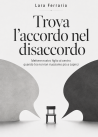
Agreement in Disagreement
Two adults can love the same child with equal intensity and have completely different ideas about how to raise them.
One thinks it is time to say no.
The other thinks it can be let go.
One wants to step in.
The other would wait.
One thinks the other is too strict.
The other thinks the first is too permissive.
And meanwhile, often, the child is right there.
Agreement in Disagreement grew out of precisely this little-discussed side of parenting.
Not from the need to persuade two parents to think alike, because that would be unrealistic and perhaps not even desirable.
It grew from the idea that being a team does not mean being two copies of the same person.
The workbook offers a space to pause before every difference of opinion about bringing up a child turns into an argument about the person beside us.
To try to understand what drives us, where certain beliefs come from, which battles really belong to the present and which we carry with us from our own past.
And, above all, to look for the common ground that can remain even when we disagree.
Because perhaps our child does not need to see two adults who always think alike.
They also need to see that it is possible to disagree without ceasing to respect one another.
Buy
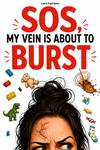
SOS – My Vein Is About to Burst
This book, by contrast, began with a particular moment in the day.
I do not know exactly what time it is for each mother.
For some, it is twenty past seven in the morning.
For others, it is seven forty-two in the evening.
Either way, it is that moment when you have already repeated the same thing nine times, someone cannot find a sweatshirt that is directly in front of them, yesterday’s ‘my favourite’ dinner has suddenly become inedible, and you can distinctly feel a vein in your forehead asking to be given a place on the family tree.
SOS – My Vein Is About to Burst is my most ironic and satirical book.
It is for mothers.
For those mothers who love their children beyond measure, who may even know the educational theories and try to speak calmly, breathe and make space for emotions, yet sometimes discover that their voice can reach frequencies hitherto considered incompatible with human life.
It is a book that laughs at family life without laughing at children.
And, above all, without laughing at mothers.
It laughs with them.
At our contradictions, the promises we make ourselves, the perfect parenting strategies that lasted until 8.13, the international negotiations required to get someone into the shower, and the mysterious phenomenon whereby a human being cannot hear ‘put your shoes on’ spoken from sixty centimetres away, yet can hear a packet of biscuits being opened three rooms away.
Yet beneath the humour lies my understanding of the relationship between adults and children.
Because it is possible to laugh a great deal about parenting and still take it seriously.
In fact.
Sometimes laughter is exactly what allows us to do something valuable:
look at ourselves from the outside without beating ourselves up.
Buy
Novels
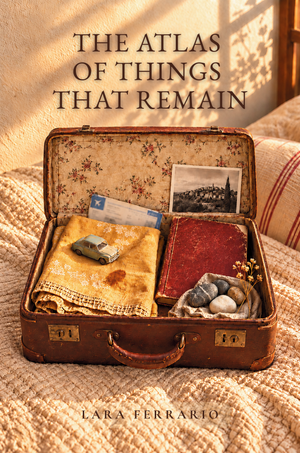
The Atlas of Things That Remain
Some books tell the story of a journey.
The Atlas of Things That Remain tells what happens when leaving becomes the easiest way not to ask where you truly want to stay.
Elia has two mothers, a suitcase always packed, and a gift everyone admires:
he knows how to adapt.
He changes cities, languages, schools.
He learns early to be the child who causes no trouble, who understands, who seems fine wherever he is.
He grows up inside an enormous love, among books, departures, photographs and laughter that arrives even in the middle of an argument.
To him, Lea and Inés are simply his mothers.
To the rest of the world, far too often, they become a question he is expected to explain.
Meanwhile, his ability to begin again each time slowly stops being a gift and becomes a role he must sustain.
Elia wishes he could be angry, uncertain, even unhappy, without it seeming like a judgement on his family or a form of ingratitude.
Because being deeply loved should not mean becoming the proof that everything is fine.
Then something he confides to Lea ends up in the pages of one of her novels.
To her, it is literature.
To Elia, those were words spoken to his mother.
Another departure approaches and, for the first time, he wants a voice in a decision that will change all three of their lives.
The Atlas of Things That Remain is an inclusive family coming-of-age novel about identity, boundaries, the right to say no, and what remains of childhood inside us.
With intimacy, humour and tenderness, it explores the delicate distance between protecting those we love and giving them the space they need to become themselves.
And it asks a simple, unsettling question:
how much of the lives of those we love can we decide before we stop listening to them?
The Yellow Swimsuit
A new novel is on the way.
Coming soon
To discover
Series: Stories Around the World
A series of myths and legends for children that turns every book into a journey: readers encounter stories, meet gods, heroes and fantastical creatures, and discover that on the other side of the world the biggest questions are often very close to our own.
With illustrations to colour, character cards to cut out and collect, games and ideas for inventing new stories, the reading continues even after the final page.
It is not a lesson to learn, but a world to explore, colour and make one’s own with curiosity and imagination.
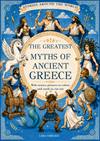
The Greatest Myths of Ancient Greece
The journey begins on Mount Olympus, where Zeus, Athena and Poseidon are nowhere near as placid as the statues.
Then come heroes, winged horses, labyrinths, Gorgons and impossible voyages: Odysseus, Medusa, the Minotaur, Pegasus, Polyphemus and the Sirens are all waiting to be discovered.
Through courage, cunning, fear and some enormous mistakes, the Greek myths reveal surprisingly imperfect gods and protagonists trying to find their own way.
A journey to read and play through, with accessible stories, illustrations to colour and, in the print edition, character cards to cut out and collect.
Buy
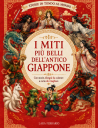
The Greatest Myths of Ancient Japan
In Japan, the boundary between the everyday world and the unseen world seems to grow thinner.
There are kami, dragons, magical foxes, kappa, yokai and emperors; Amaterasu, Susanoo, Momotaro and Kaguya guide readers through legends filled with mystery, nature and transformation.
Each story opens a door to a distant and wondrous realm, where even the smallest detail may hide a story.
The illustrations and character cards invite readers to colour, cut out, collect and even invent new adventures.
Buy
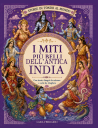
The Greatest Myths of Ancient India
A journey through ancient India, where gods, goddesses, animals and extraordinary creatures star in stories filled with great questions.
Alongside Brahma, Vishnu, Shiva, Ganesha, Hanuman, Rama, Sita and Krishna come sacred rivers, divine serpents, celestial eagles and worlds in which time can end and begin again.
Less familiar words are explained along the way, leaving room for discovery without losing the thrill of adventure.
The character profiles help readers recognise figures and symbols, turning reading into a game of clues, memory and imagination.
Buy
To help stories travel
Parole in Aria
A book does not only need to be written.
It needs to meet someone.
Parole in Aria is an open space dedicated to books and independent authors: a shared identity that gives self-published stories greater visibility and helps them find new readers.
We cannot choose who our children will become.
But we can try to build with them a place safe enough to set out from.
The rest, sooner or later, will have to belong to them.
Write to me
If you would like to tell me about a book, a publishing project, a collaboration, or simply what one of my pages has left with you, you can write to me.
I cannot promise an intelligent answer to everything.
After all, I have written whole books precisely because I still have questions.
Instagram · @parole_in_aria